By Luzuko Mabhongo, School Support Programme Officer
View Video Here: https://drive.google.com/file/d/1I8TDwEFyVctEIWwQhSxQ2vlm1Um05QDb/view?usp=sharing
What does a child do when there is no book at home?
For many of the learners we work with, the answer is simple. They go without. For some, the school library is the only place to find a story. That is where our reading work begins, and where the gap starts to close.
During English sessions, learners practise reading for meaning. Comprehension exercises help them understand what they read, not just decode the words. We also use guided reading, reading aloud and independent reading. Each method gives learners a different way to practise and grow. Some find their voice when they read aloud. Others come alive when they read quietly on their own.
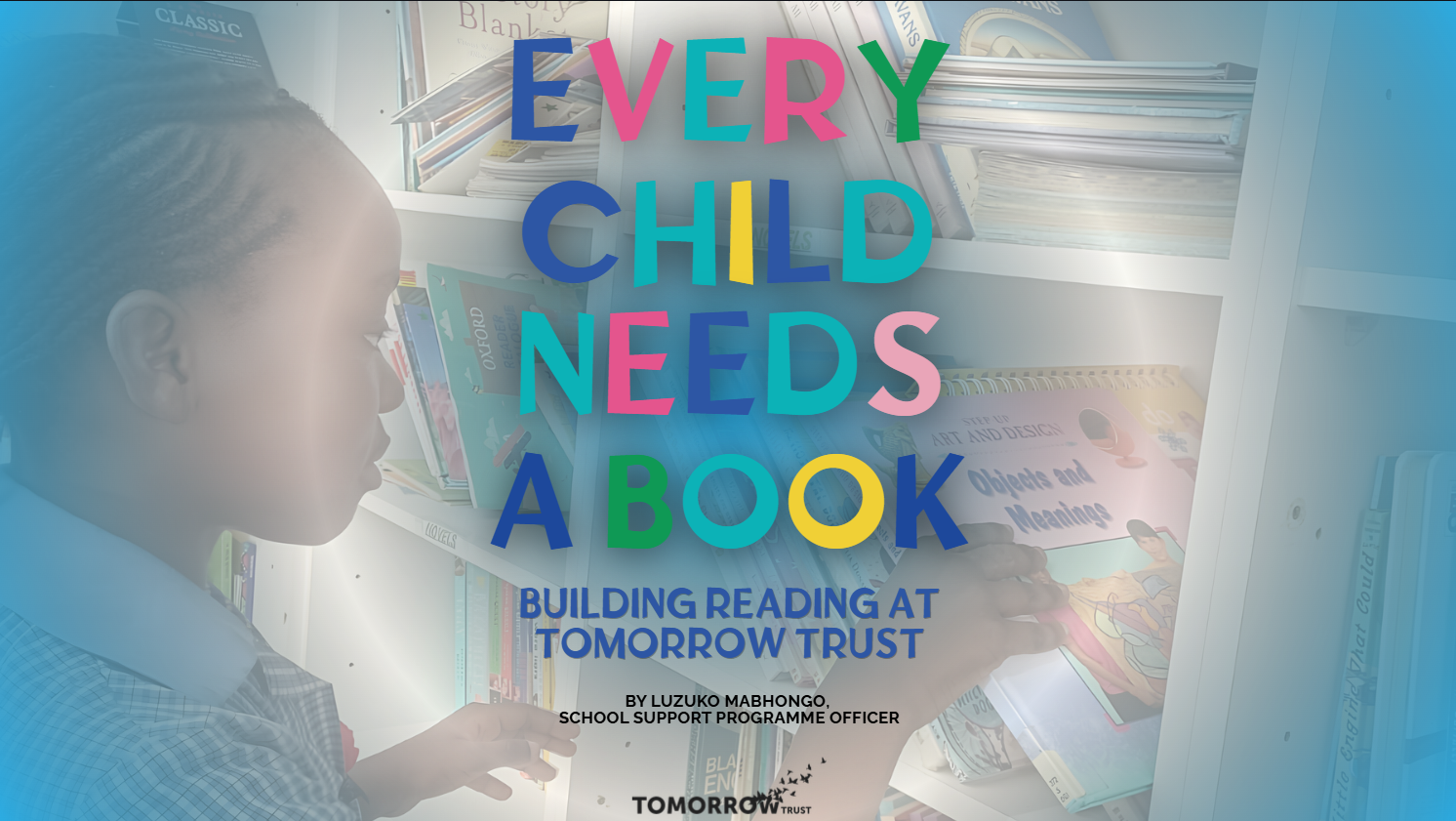
Learners in Grades 3, 4, 5, 6 and 7 are asking for books from the school library. Most want short stories and poems, and they read them for pleasure as well as for their schoolwork. That tells us something important. Learners want to read beyond what we offer in class. We find that encouraging, and it shows us where to build next.
The library opens doors to books that support both schoolwork and personal interests. Every learner is different, so a wide range of books gives each one a chance to find something worth reading. The demand for short stories and poems also shows that learners enjoy different forms of writing. We can use that interest to encourage reading for both enjoyment and learning.
In 2027, we will add 30 minutes to our English periods. They will grow from one hour and 30 minutes to two hours, and reading will sit at the heart of each session. Each day will follow a clear structure: 10 minutes of group reading, guided by a facilitator or teacher, 15 minutes of individual reading, and 5 minutes of reflection. Learners get structured, consistent time to practise. Over time, that builds comprehension and a habit of reading beyond the classroom.
We will assess learners before sessions begin and again at the end of the programme. These baseline and final assessments will show where each learner starts and how far they have come. We will also track participation, the number of reading sessions attended, and how well learners engage and stay focused. We will look at the books, stories and other texts they read, and how well they can recall, explain and interpret them. We will record progress between assessments and keep an eye on library use, including which books are borrowed, returned and requested most. This information will help us spot learners who need extra support and guide decisions about the programme in the years ahead.
Reading does not change a child’s life overnight. It grows slowly, one story at a time. It takes daily practice, a library that keeps growing and adults who make time for it. In 2027, Tomorrow Trust is committing to that daily time, and to measuring what it achieves, so we can see progress and act on it.
Every learner who opens a book takes a step towards confidence, understanding and a future of their own choosing. Every child deserves a book worth reading.
Curious. Confident. Ready to read. Ready to grow.
At Tomorrow Trust, the story does not end at the last page.